
Learning From History: B2B Frameworks That Weathered Past Economic Storms
Navigating Uncertainty: How B2B Product CEOs Can Thrive in Today's Economic Climate
As we navigate the complex economic landscape of 2025, B2B product company CEOs find themselves at a critical crossroads. The recent implementation of sweeping tariffs; a baseline 10% on nearly all imports, 34% on Chinese goods, and a staggering 46% on Vietnamese imports. This sent shockwaves through global markets. Major stock indices have declined, and economists are warning of potential stagflation.
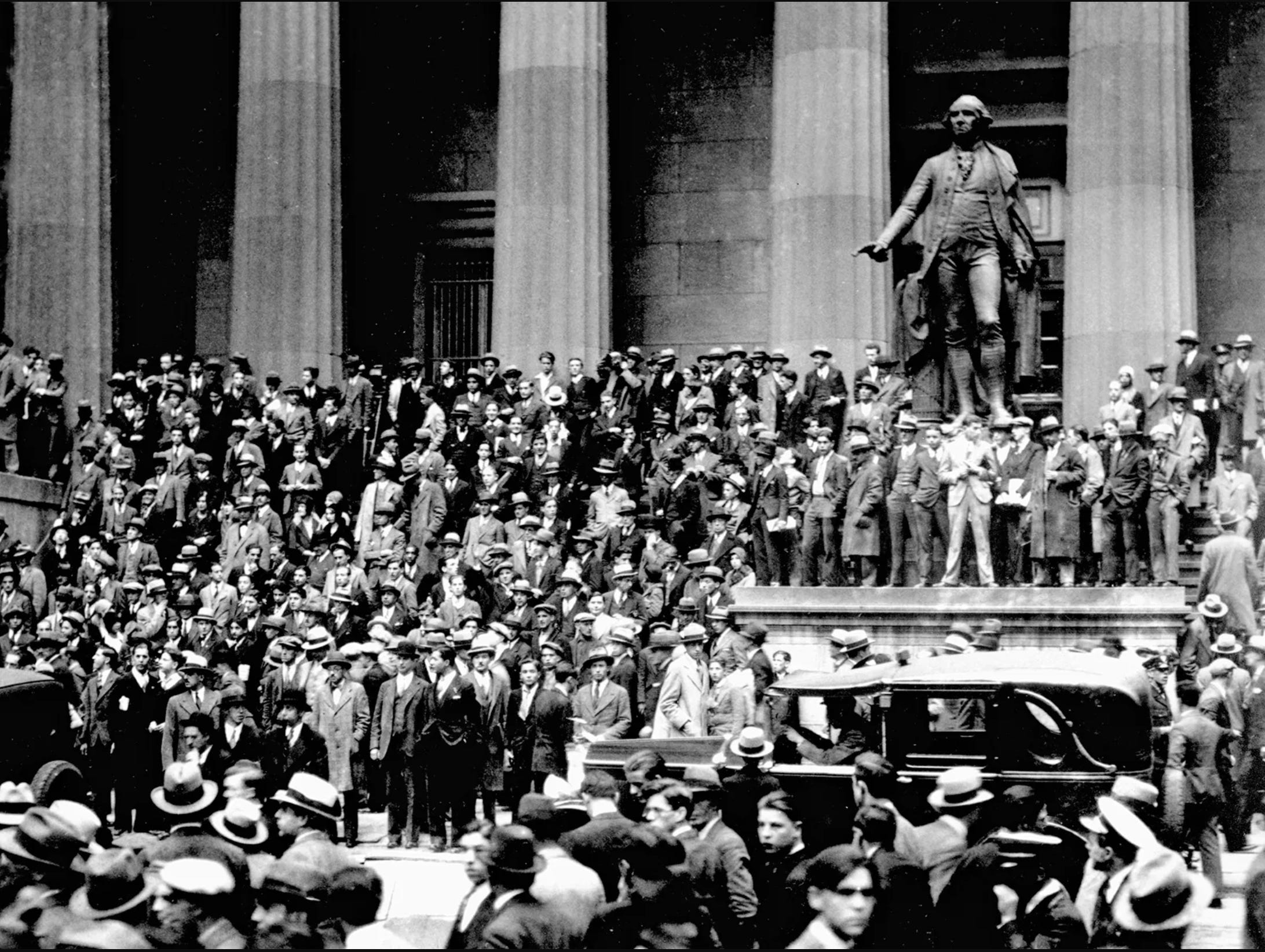
This isn't just another bump in the road. Unlike past periods of uncertainty, which often emerged from internal economic factors or financial crises, today's challenges stem from deliberate policy actions that have rapidly intensified global trade tensions. The speed and scale of these changes demand a nimble, strategic response.
Yet history offers us valuable lessons. Throughout America's economic journey from the Great Depression to the Great Inflation to the Great Recession, innovative companies found ways not just to survive but to thrive amid uncertainty.
And today, we have a powerful new ally in this quest: generative AI.
In this post, I'll explore:
Battle-tested frameworks that guided companies through past crises
How these frameworks can be adapted for today's unique challenges
The transformative role of AI in both accelerating efficiency and reimagining your core value proposition
Learning From History: Frameworks That Weathered Past Storms
Scenario Planning (The Royal Dutch Shell Approach)
During the 1970s oil crisis, Royal Dutch Shell distinguished itself through systematic scenario planning. Rather than attempting to predict a single future, Shell developed multiple plausible scenarios and prepared for each. This approach proved remarkably effective, propelling Shell from one of the weakest "Seven Sisters" of oil to one of the strongest.
Core principle: Create 3-5 divergent but plausible futures, map their implications for your business, and prepare contingency plans for each.
Modern application: In today's tariff-driven uncertainty, your scenarios might include:
"Trade War Escalation" (increased retaliatory measures)
"Regional Realignment" (formation of new trade blocs)
"Negotiated Settlement" (gradual easing of tensions)
For each scenario, map impacts on your supply chain, pricing strategy, and product roadmap. The goal isn't to predict which scenario will occur, but to build organizational muscles for rapid adaptation when circumstances shift.
Lean/Agile Methodologies
Companies that emerged strongest from the 2008 financial crisis were often those that embraced lean principles; minimizing waste, testing hypotheses rapidly, and staying close to evolving customer needs.
Core principle: Replace big bets with small, iterative experiments that deliver measurable value.
Modern application: As B2B budgets tighten under tariff pressures, your customers' willingness to commit to long-term, high-cost solutions may waver. Break your product roadmap into smaller, independently valuable components. Test pricing models that reduce upfront commitments. Create feedback loops that capture shifting customer priorities in real-time.
"Wartime" vs. "Peacetime" Leadership (Ben Horowitz)
Ben Horowitz's distinction between "peacetime" and "wartime" leadership offers a valuable mental model for navigating crisis. Peacetime allows for consensus-building and long-term vision; wartime demands decisive action and relentless focus.
Core principle: In times of existential threat, shift decision-making styles from consensus-driven to directive, and focus intensely on the most critical battles.
Modern application: The current economic uncertainty may require you to temporarily adopt wartime leadership. This means:
Communicating with heightened clarity and urgency
Empowering rapid decision-making at all levels
Focusing resources on defending your core market position
Being willing to make painful but necessary cuts
The key is recognizing when to shift between peacetime and wartime modes and ensuring your team understands the reason for the change.
Porter's Five Forces / Value Chain Analysis
Michael Porter's frameworks remain powerful tools for understanding how economic shifts impact competitive positioning.
Core principle: Analyze how external forces; supplier power, buyer power, competitive rivalry, threat of substitutes, and threat of new entrants. Shape your strategic options.
Modern application: Tariffs fundamentally alter your value chain economics. They may strengthen the hand of domestic suppliers, change the calculus for nearshoring vs. offshoring, or create openings for substitutes. A fresh value chain analysis might reveal that components you previously manufactured overseas should now be sourced domestically, or that rising input costs justify premium positioning rather than cost leadership.
Cash Management & Profitability Focus
During the Great Depression, companies that prioritized liquidity and operational efficiency outlasted better-funded competitors who burned through cash reserves.
Core principle: In uncertain times, cash is king. Extend your runway, scrutinize expenses, and focus on profitability even at the expense of growth.
Modern application: With capital markets tightening and customers extending sales cycles, B2B product companies should:
Extend runway through operational efficiency
Shift from growth-at-all-costs to sustainable unit economics
Preserve cash for opportunistic acquisitions when competitors falter
Build scenario-based cash flow projections with conservative assumptions
Value-Based Pricing & Tiered Offerings
During the 2007-2009 recession, companies that offered flexible pricing models often maintained revenue growth even as customers cut budgets.
Core principle: Match your pricing structure to customers' varying risk tolerance and budget constraints.
Modern application: As tariffs potentially squeeze your customers' margins, consider:
Creating good/better/best tiers that preserve access to your core value
Offering usage-based pricing that aligns costs with customer value
Developing limited-time offers that reduce commitment barriers
Testing bundling/unbundling to find price-sensitive value drivers
Partnership & Co-Development Strategies
Throughout history, periods of economic uncertainty have often spurred surprising collaborations as companies sought to share risk and accelerate innovation.
Core principle: Strategic partnerships can extend your reach, share development costs, and create resilience against market shocks.
Modern application: The current tariff situation may make certain markets or capabilities prohibitively expensive to develop independently. Consider:
Partnering with companies in key markets to bypass tariff barriers
Co-developing products to share R&D costs
Forming joint ventures to access complementary capabilities
Creating marketplace or platform models that distribute risk
Transforming Crisis Into Opportunity with AI
While these frameworks have proven their worth through numerous economic cycles, generative AI adds a new dimension, both accelerating implementation and opening entirely new strategic possibilities.
Productivity Boosts & Capital Efficiency
Generative AI offers unprecedented opportunities to do more with less:
1. Enhanced Scenario Planning AI can process vast datasets to identify emerging patterns and predict scenario triggers with greater precision. Rather than quarterly scenario reviews, AI enables continuous monitoring of leading indicators, alerting you the moment conditions begin to align with a particular scenario.
2. Accelerated Product Development AI-assisted coding, design, and testing can compress development cycles by 30-50%. This means you can test more hypotheses with the same resources, reducing the cost of being wrong and accelerating the path to product-market fit.
3. Automated Customer Intelligence Instead of periodic surveys or focus groups, AI can continuously analyze customer interactions, support tickets, and usage patterns to identify emerging needs or friction points. This keeps you aligned with customer priorities even as they rapidly evolve.
4. Dynamic Pricing Optimization AI can analyze transaction data to identify price elasticity at a granular level, enabling you to adjust pricing strategies in response to tariff impacts without sacrificing margin.
5. Supply Chain Resilience AI-powered forecasting can help you anticipate supply chain disruptions before they occur, allowing for proactive inventory management and supplier diversification.
Reimagining Jobs To Be Done
Beyond efficiency gains, AI enables entirely new approaches to solving customer problems:
1. From Products to Outcomes AI makes it possible to shift from selling products to guaranteeing outcomes. Rather than selling a tool, you can leverage AI to deliver the end result your customer actually wants, often at lower cost and with greater precision.
For example, a marketing automation company might evolve from selling campaign tools to guaranteeing qualified leads, using AI to continuously optimize channel mix and messaging.
2. Embedded Intelligence By embedding AI capabilities directly into your products, you can dramatically increase their value without proportional cost increases. This creates defensible differentiation even in price-sensitive markets.
A procurement software company, for instance, might add AI-powered negotiation coaching that helps customers achieve better supplier terms, a high-value addition that costs little to scale.
3. New Value Creation Models AI enables novel business models that weren't previously viable. Marketplaces become more efficient with AI-powered matching. Complex customization becomes economically feasible through generative design. Professional services become productized through AI-augmented delivery.
4. Cross-Domain Innovation AI excels at making connections across disparate knowledge domains. This enables B2B product companies to find unexpected applications for their core technology, potentially opening entirely new markets less affected by current economic pressures.
Conclusion: Thriving Amid Uncertainty
The current economic environment presents genuine challenges for B2B product companies. Rising tariffs, market volatility, and global trade tensions create a complex landscape that defies simple navigation.
Yet history teaches us that periods of uncertainty often separate future market leaders from also-rans. Companies that respond with strategic clarity, operational discipline, and innovative thinking don't just survive, they emerge stronger and with expanded market positions and deeper customer relationships.
The frameworks that guided companies through past crises remain powerful tools today. When augmented by AI's transformative capabilities, they offer a path not just to resilience but to reimagining what's possible for your business.
The question isn't whether your company will be changed by this period of uncertainty. It will. The question is whether you'll shape that change proactively, turning disruption into opportunity through strategic foresight and technological leverage.